Every flooring conversation starts in the same place. You’ve seen three materials that look similar in the showroom and cost very different amounts. Now you’re trying to figure out which one actually belongs in your house. The hardwood versus laminate versus vinyl plank question doesn’t have one answer, because the right choice changes room by room. Moisture, traffic, subfloor condition, and how long you plan to stay all push the decision in different directions. What works beautifully in a second-floor bedroom can be the wrong call in a basement. The material that survives a rental turnover isn’t the one that adds most at resale. In New Jersey one more factor trips people up. Humidity swings and below-grade moisture are real here, and wood responds to both. Basements and bathrooms especially punish the wrong choice here. Here’s an honest comparison of what each material actually does well, and where each one fails.
Hardwood: The Long Game
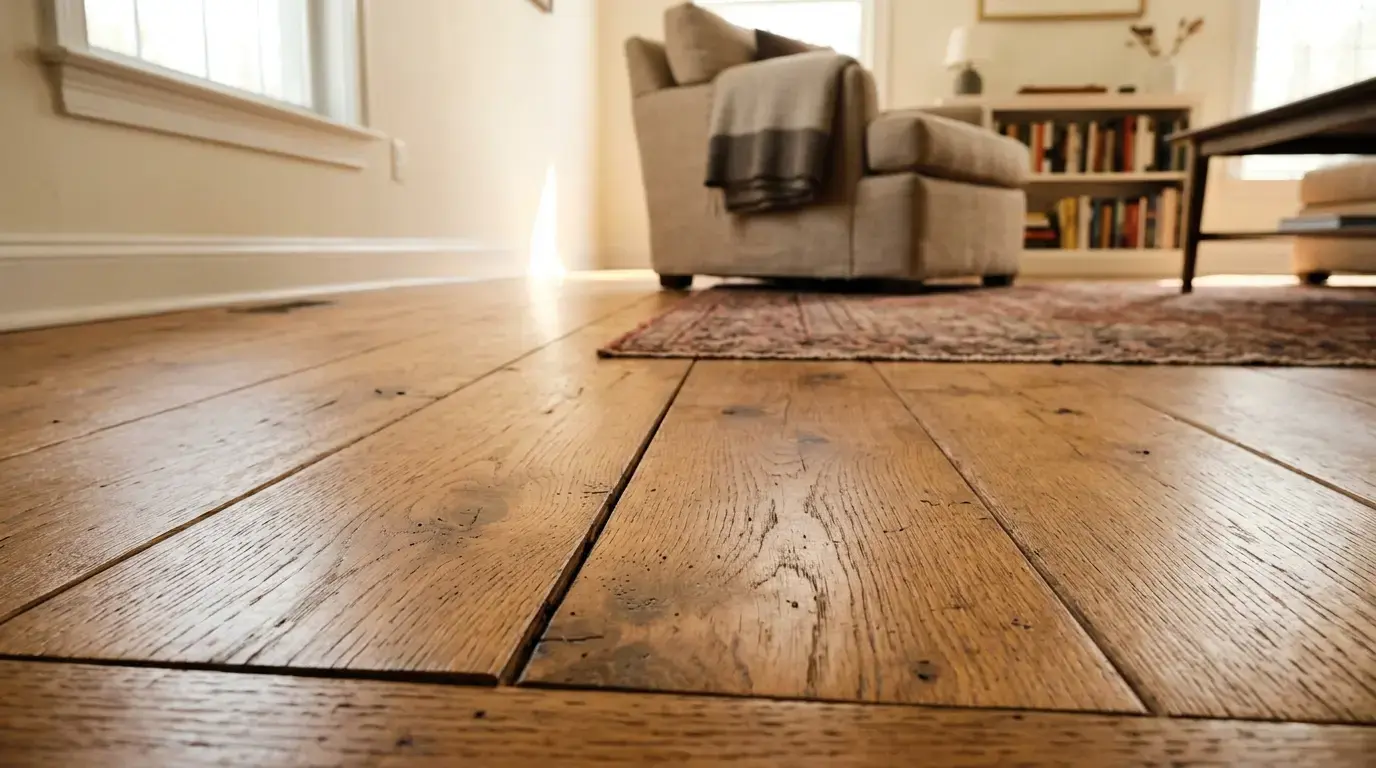
Solid and engineered hardwood are the only options here that can be refinished. A hardwood floor can outlive several rounds of the alternatives. That’s the real argument for it. It also carries weight at resale in a way the others don’t. The trade-offs are moisture and cost. Solid hardwood needs stable conditions, which rules out most basements and makes it risky over concrete slabs. It also needs to acclimate before installation, so the schedule is longer. Engineered hardwood solves much of the moisture problem with a plywood core and real wood on top. It handles below-grade and radiant conditions that solid wood can’t. It costs more than laminate or vinyl, and it’s worth it when the conditions suit it.
Work room by room instead of picking one material for the whole house.
Laminate: Appearance Per Dollar
Laminate gives the most convincing wood appearance for the lowest cost per square foot. Modern products look far better than what most people remember. It installs as a floating floor over the right underlayment, which makes it forgiving over subfloors that aren’t perfect. It’s also hard-wearing on the surface, which is why it holds up in hallways and living areas. The weakness is water. Laminate has a fiberboard core. When water gets into a seam and reaches that core, the plank swells and doesn’t recover. Water-resistant products have improved, but resistant isn’t waterproof. For bathrooms, laundry rooms, and basements, this is the wrong material regardless of what the box says.
Vinyl Plank: The Practical Answer
Luxury vinyl plank has taken over kitchens, bathrooms, basements, and rental units for one reason. It’s genuinely waterproof through the core, so a leak or a mopping accident doesn’t destroy it. It installs over concrete slabs, over imperfect subfloors, and in below-grade rooms where wood shouldn’t go. It’s also softer and quieter underfoot than laminate. The trade-offs are appearance and value. Good vinyl plank looks convincing, but it doesn’t carry the resale weight hardwood does, and it can’t be refinished. When it wears out it gets replaced. For a rental, a basement, or a family kitchen, that’s usually the right trade. For a formal living room in a house you plan to keep, it may not be.
How to Actually Decide
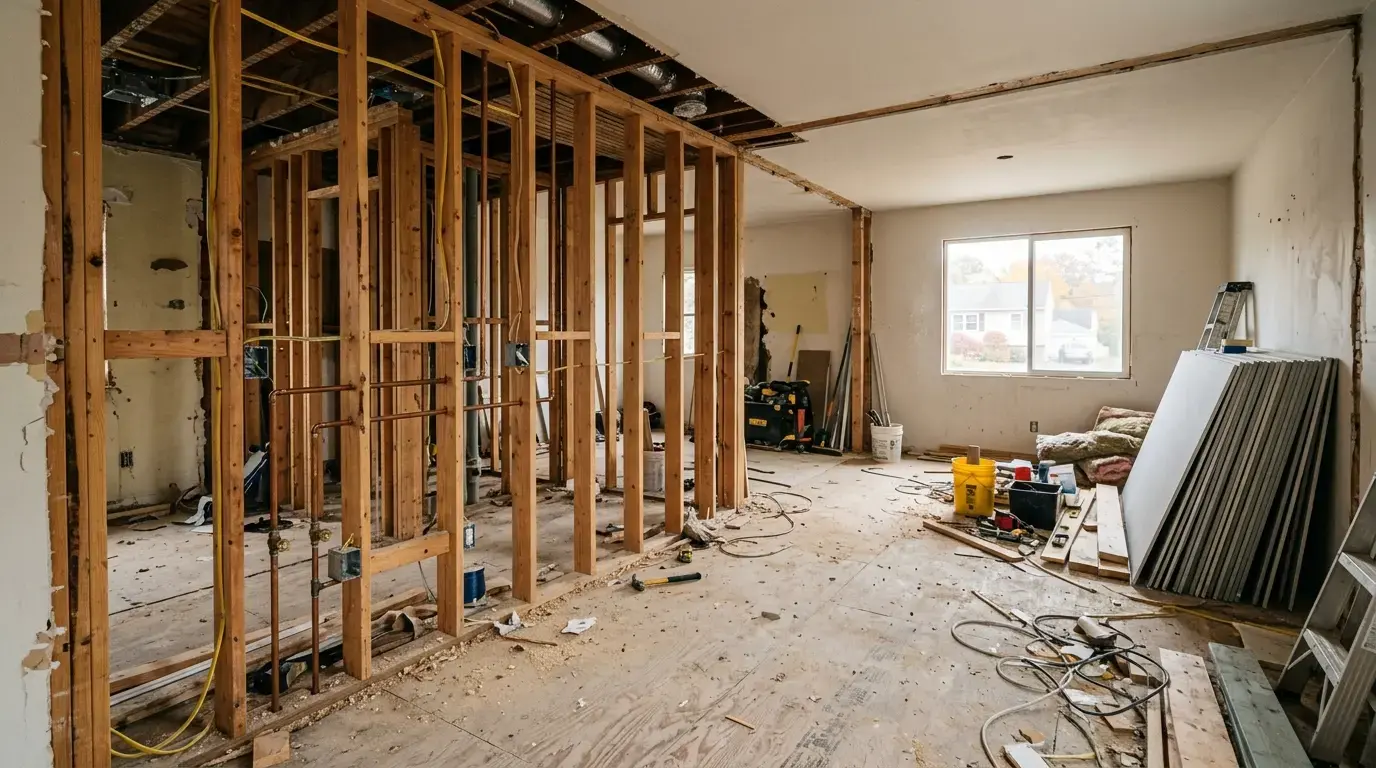
Work room by room instead of picking one material for the whole house. Below grade or over a concrete slab, vinyl plank or engineered wood. Bathrooms, laundry, and mudrooms, vinyl plank or tile. Kitchens depend on how the household treats them. Bedrooms and living areas can take any of the three, so budget and how long you’re staying decide it. Rental turnover almost always points to vinyl plank. One more thing that matters more than material choice: the subfloor. All three of these fail over an unlevel or loose subfloor. Money spent flattening and securing what’s underneath does more for the result than upgrading the material one tier.
The right flooring depends on the room and the subfloor underneath it. Learn more about our Flooring Installation or, if you are in Bergen County, our Flooring Installation in Hackensack, NJ. When you are ready, get a free estimate and tell us the rooms and the square footage.