Most renovation problems aren’t quality problems. They’re sequence problems. A crew shows up to do good work at the wrong moment. Either they damage what came before or they get damaged by what comes after. Understanding the order of trades in a home renovation matters. It separates a project that runs three weeks from one running three months. The principle underneath it is simple. Work moves from structural to rough to finish, and from dirty to clean. Anything that generates dust, debris, or heavy traffic should happen before anything that has to look perfect. Anything that lives inside a wall has to be finished before the wall closes. Every experienced contractor follows some version of this. Homeowners rarely see the logic, which is why the schedule can feel arbitrary. None of it is arbitrary once you see the logic. Here’s the sequence, and more usefully, the judgment calls where reasonable people still disagree.
Demolition and Structure Come First
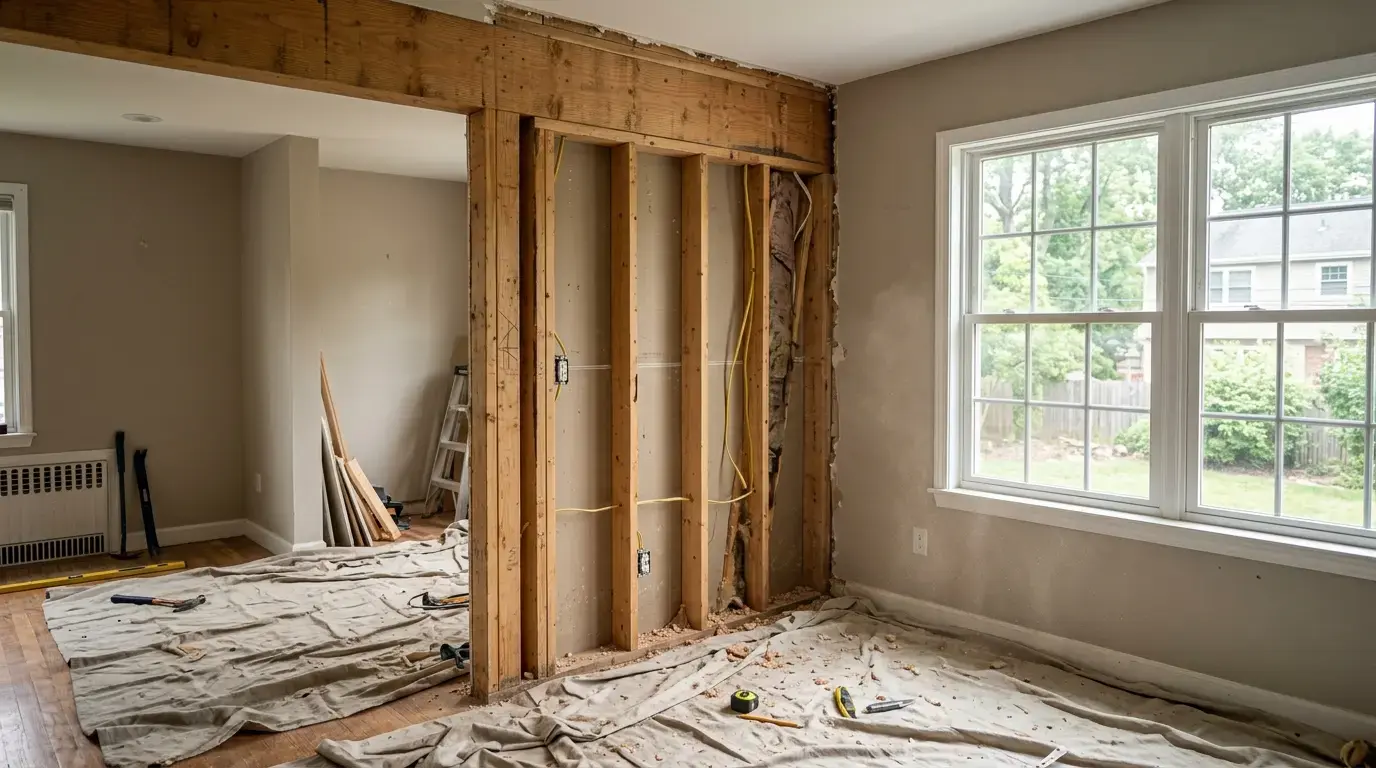
Everything starts with removal. Old finishes, old flooring, and anything being removed has to go before new work begins. This stage almost always reveals something. Rot behind a wall, a failed subfloor, or previous bad work all show up now. That’s exactly why demolition comes first. Structural work follows immediately. Framing, load-bearing changes, and floor system repairs all happen while the walls are open and access is easy. Concrete work outside often runs in parallel here, since it’s independent of the interior and weather-dependent anyway. The rule for this phase is simple. Anything needing access inside a wall or under a floor happens now, because reopening later costs far more.
Most renovation problems aren’t quality problems. They’re sequence problems.
Rough-Ins Before the Walls Close
Once framing is set, anything living inside the wall goes in. Plumbing, electrical, and mechanical rough-ins all happen at this stage, along with blocking and backing for whatever gets mounted later. That blocking step gets skipped constantly and causes real frustration. Cabinets, railings, grab bars, and heavy shelving all need solid wood behind the drywall. Adding it afterward means opening a finished wall. Inspections typically happen at this stage, before anything is covered, and requirements vary by municipality. Once everything inside the wall is complete and approved, drywall goes up. From that point forward, any change inside the wall is expensive rather than routine.
Finish Work Runs Clean to Cleanest
After drywall, the order runs roughly: primer, then finish carpentry and trim, then flooring, then final paint coats, then fixtures. The reason trim goes before flooring in many projects is that trim generates dust and requires cutting. Doing it over finished flooring means protecting the floor and cleaning constantly. But this is where sequences legitimately differ. Some contractors install flooring first and set baseboard on top of it. That produces a cleaner detail and eliminates the gap shoe molding usually covers. Both approaches are defensible. What matters is that everyone knows which one is planned. A trim carpenter expecting finished floors and an installer expecting bare subfloor is how schedules fall apart.
Paint Before or After Flooring
This is the argument every renovation has. Painting before flooring means no risk of drips on a new floor. Cut lines at the base can be done freely. Painting after means the trim gets caulked and touched up once everything is set. That usually gives a cleaner final result. Most projects land on a compromise. Walls and ceilings get painted before flooring, then touch-ups and final trim coats happen afterward. That splits the difference and protects both. Whatever gets decided, decide it early. Sequence changes made mid-project turn a clear schedule into a series of return visits. Return visits are what make renovations feel endless.
A renovation runs on sequence. One contractor handles Framing Services, Interior & Exterior Painting, and Trim Installation & Repair under one schedule. When you are ready, get a free estimate and tell us what the project needs.