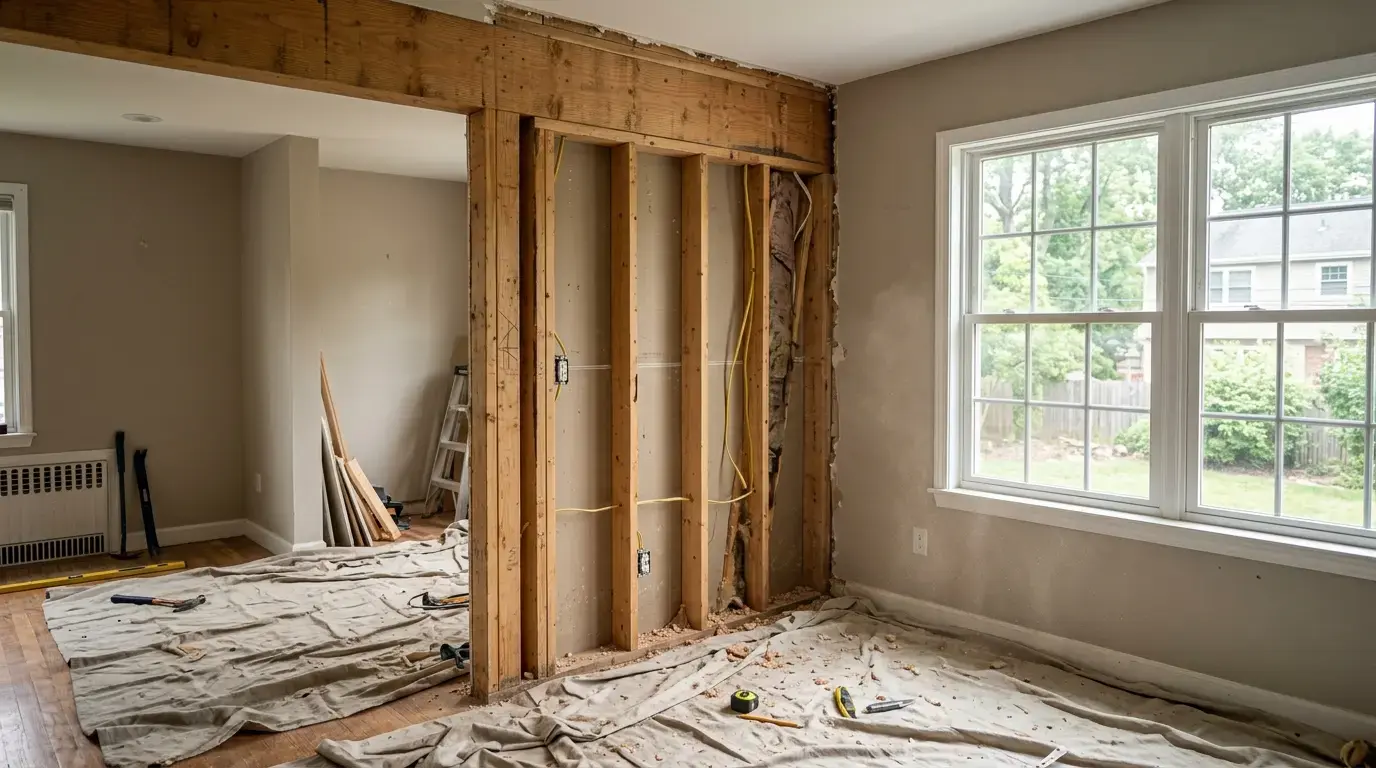
You walk across the living room and the china rattles in the cabinet. Or there’s one board near the doorway that announces every trip to the kitchen at two in the morning. If you’re asking why your floor bounces and squeaks, the answer is almost never the flooring you can see. It’s the structure underneath it. Bounce and squeak are two different problems with two different causes. People often try to solve both by replacing the surface. That’s an expensive way to end up with a newer floor that still moves. In older New Jersey homes this comes up constantly. Framing standards have changed a lot since these houses were built. What passed for adequate joist spacing in 1925 feels very different to someone living there in 2026. The good news is that both problems are usually fixable without tearing the whole floor out. Here’s what’s actually happening under your feet.
Bounce Comes From the Joists, Not the Floor
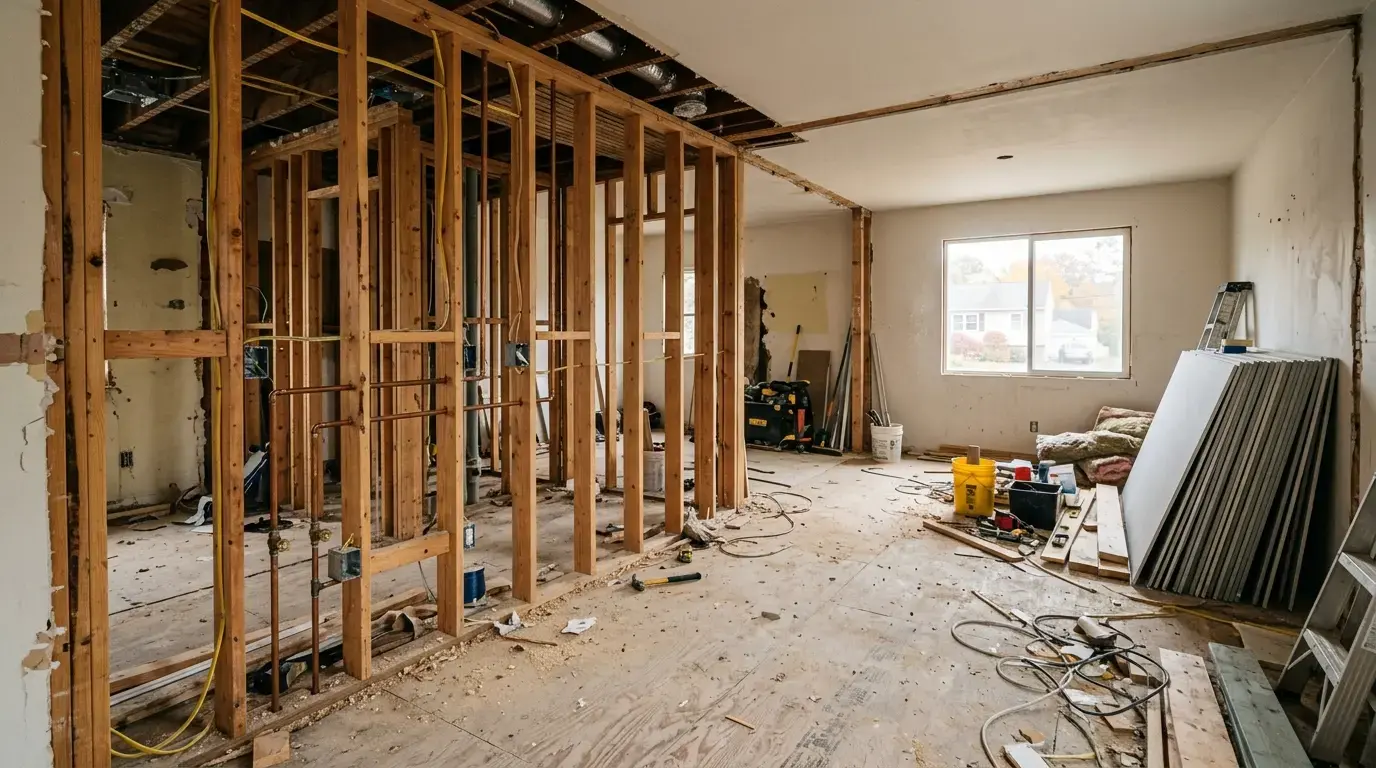
Bounce is deflection. The joists carrying your floor are flexing under load, and you feel that flex as movement. Three things cause it. The joists may be spaced too far apart. They may be undersized for the distance they span. Or the span itself may be too long without any support in the middle. Older homes often have all three, because they were framed to standards that assumed lighter furniture and different expectations. Missing blocking makes it worse. Blocking ties adjacent joists together so they share the load instead of each one flexing alone. Blocking sometimes gets cut out during a plumbing job. When it’s missing, every joist works alone and the floor feels springy.
Bounce comes from the joists under the subfloor. New flooring sits on top of the problem.
Squeaks Come From Movement Between Layers
A squeak is friction. Something is rubbing against something else when weight moves across it. Usually that’s the subfloor moving against a joist. Sometimes it’s a nail sliding in its hole as the panel flexes. Old subfloors were nailed, and nails work loose over decades. The panel lifts slightly under weight and drops back, and the nail shank rubs the wood every time. Squeaks near a wall or a doorway often come from a subfloor seam that isn’t supported underneath. Squeaks in the middle of a room usually mean the panel has separated from the joist. Both are fixable. Neither gets fixed by putting something new on top.
Why New Flooring Doesn’t Solve It
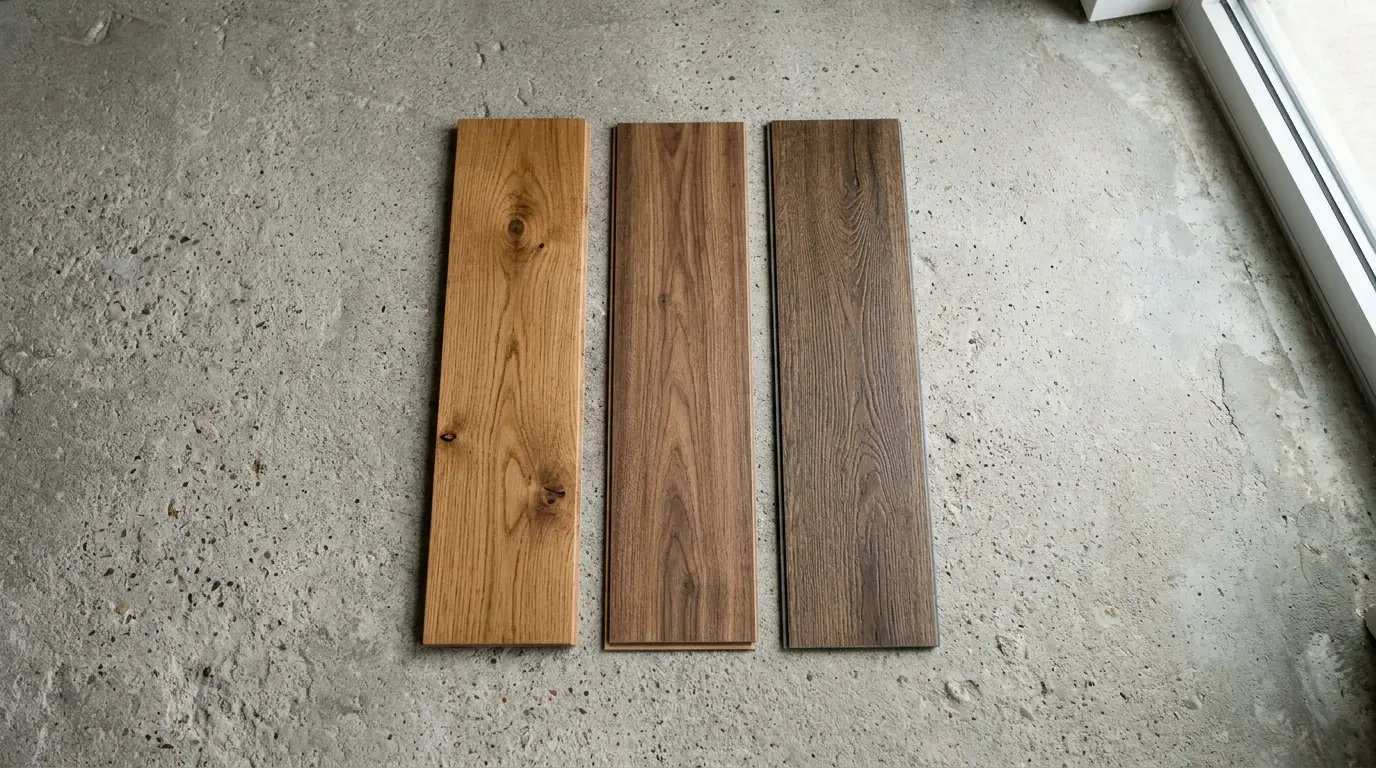
This is the part that costs people money. New flooring goes over the subfloor, and the subfloor is where the problem lives. Installing hardwood or vinyl plank over a bouncing floor gives you a bouncing hardwood floor. Installing it over a squeaking subfloor gives you a squeaking new floor. Sometimes worse, because a floating floor can amplify the noise. The right sequence is to open the floor, fix the structure, then install. That’s why a flooring quote that doesn’t mention subfloor inspection should make you suspicious. Anyone who quotes square footage without looking underneath is quoting the easy half of the job.
What the Actual Fix Looks Like
For bounce, the usual fix is sistering. A new joist gets fastened alongside the existing one along the full span, which effectively doubles what’s carrying the load. Adding blocking between joists helps too. On some spans a beam or post underneath costs less than sistering everything. For squeaks, the fix is mechanical. Screws replace nails and pull the subfloor tight against the joist. Construction adhesive fills gaps where wood has shrunk away. If you have access from below, through a basement or crawlspace, both repairs get much simpler and cheaper. That access is the first thing worth checking before you assume the floor has to come up.
If your floor is bouncing or squeaking, the fix starts under the surface, not on top of it. Learn more about our Framing Services or, if you are in Bergen County, our Framing Services in Hackensack, NJ. When you are ready, get a free estimate and send us photos of the area and the basement below.